

Advanced Laravel Techniques Used in Real Production Applications
Most Laravel tutorials stop at CRUD operations. But once an application starts handling real traffic, large datasets, background jobs, payment workflows, or concurrent users, the architecture needs to evolve.
Over the last few projects, I worked on implementing several advanced Laravel techniques that helped improve scalability, maintainability, and overall application performance.
These are not just theoretical concepts. These are practical patterns commonly used in real production-grade Laravel applications.
Why Production-Level Laravel Development Is Different
Building features is one thing. Building systems that continue to perform under heavy traffic is a completely different challenge.
As applications grow, common issues start appearing:
- Slow database queries
- Race conditions
- Duplicate transactions
- Heavy controller logic
- Scalability bottlenecks
- Unoptimized relationships
- Server overload during peak traffic
Laravel provides a surprisingly elegant ecosystem to solve many of these problems cleanly.
1. Database Transactions for Data Consistency
One of the most important techniques in production systems is using database transactions properly.
In modules like:
- Order placement
- Wallet systems
- Subscription billing
- Inventory management
- Fantasy gaming platforms
multiple database operations must succeed together.
Without transactions, partial failures can corrupt application data.
Example
DB::transaction(function () use ($data) {

    $order = Order::create([
        'user_id' => $data['user_id'],
        'total' => $data['total']
    ]);

    foreach ($data['items'] as $item) {

        OrderItem::create([
            'order_id' => $order->id,
            'product_id' => $item['product_id']
        ]);
    }
});
If any query fails inside the transaction, Laravel automatically rolls everything back.
This small practice prevents many real-world production issues.
2. Row-Level Locking to Prevent Race Conditions
High traffic applications often face concurrency problems.
For example:
- Two users purchasing the last product simultaneously
- Wallet balance updating at the same time
- Duplicate seat booking requests
This is where row-level locking becomes extremely useful.
Laravel Example
$product = Product::where('id', $id)
    ->lockForUpdate()
    ->first();
This ensures the selected row remains locked during the transaction and avoids inconsistent updates.
In real production systems, this technique is critical for data integrity.
3. Cache Optimization for Better Performance
One thing I learned while working on scalable systems is:
Database queries become expensive very quickly.
Even optimized queries can slow down applications when traffic grows.
That is why Redis caching becomes almost mandatory for production Laravel applications.
Common Laravel Caching Strategies
- Homepage caching
- Leaderboard caching
- API response caching
- Configuration caching
- Query result caching
- Tagged cache invalidation
Example
$products = Cache::remember(
    'homepage_products',
    3600,
    function () {
        return Product::latest()->get();
    }
);
A properly designed caching layer can reduce database load massively.
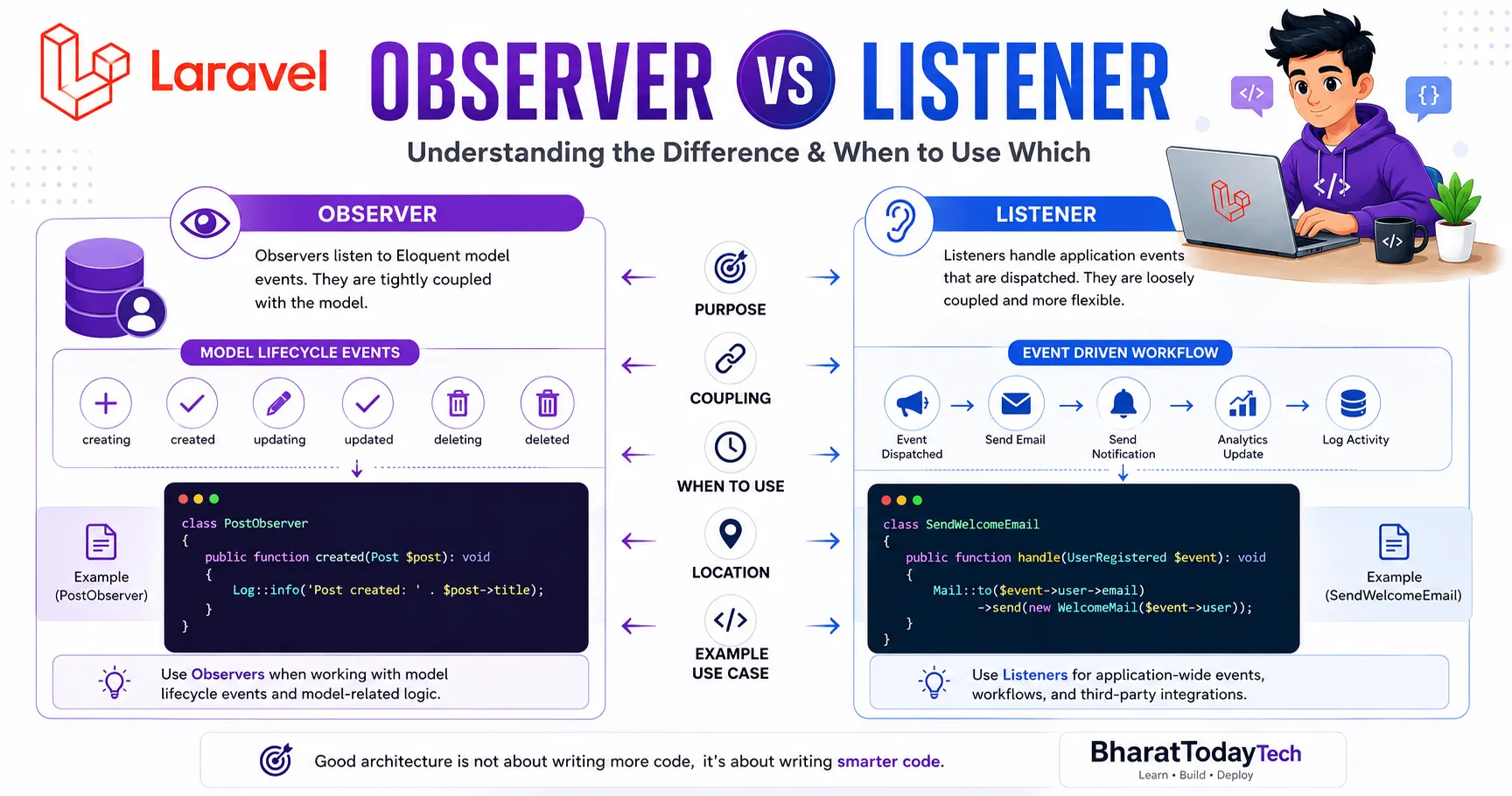
4. Event-Driven Architecture Makes Applications Cleaner
As projects become larger, keeping everything inside controllers quickly turns messy.
One pattern that improves maintainability significantly is event-driven architecture.
Instead of tightly coupling logic, Laravel events allow different modules to react independently.
Real Production Examples
- Send welcome emails after registration
- Trigger notifications after payment success
- Update analytics asynchronously
- Push webhook updates
- Create audit logs
Simple Laravel Event
event(new OrderPlaced($order));
This keeps business logic modular and easier to scale over time.
5. Eager Loading for Query Optimization
The N+1 query problem is one of the most common performance issues in Laravel applications.
Many developers accidentally create hundreds of unnecessary queries without realizing it.
Problematic Approach
$orders = Order::all();

foreach ($orders as $order) {
    echo $order->user->name;
}
This can generate one additional query per order.
Optimized Approach
$orders = Order::with('user')->get();
Using eager loading correctly improves response times significantly.
This becomes even more important in APIs and dashboard-heavy systems.
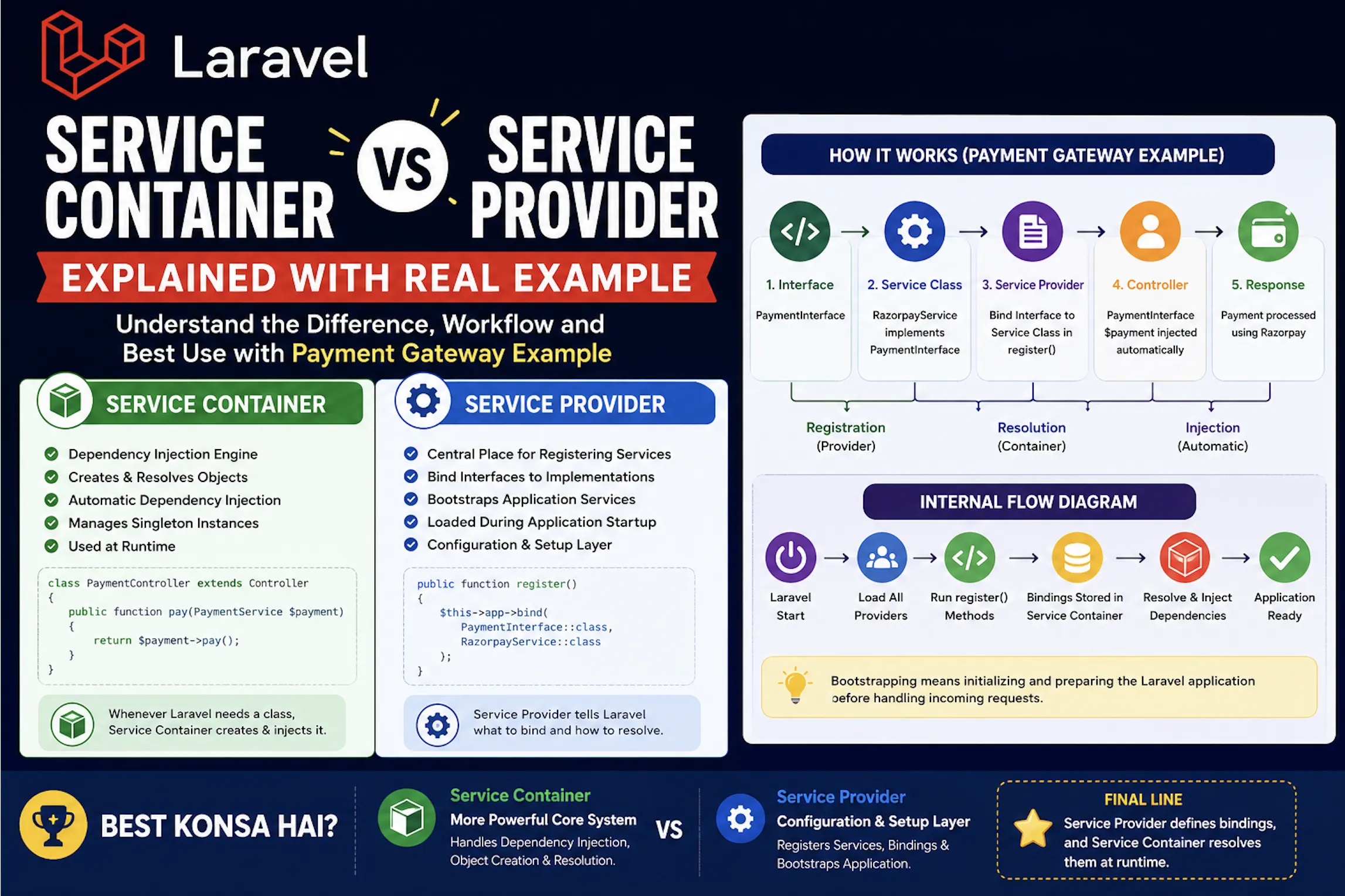
6. Clean Service-Based Architecture
One thing that genuinely improves long-term maintainability is separating business logic from controllers.
Instead of massive controllers, production Laravel projects often use:
- Service classes
- Repository pattern
- Action classes
- DTOs
- Domain-based modules
Example Structure
app/
 ├── Services/
 ├── Repositories/
 ├── Actions/
 ├── DTOs/
 └── Events/
This structure makes applications easier to test, debug, and scale.
What Actually Matters in Production Applications
Writing code is easy.
Writing scalable, maintainable, and production-ready code is where real engineering starts.
The goal is not just making features work. The goal is building systems that continue working efficiently when traffic, users, and complexity increase.
Laravel gives developers a powerful balance between developer experience and enterprise-level scalability.
Final Thoughts
Laravel is much more than a beginner-friendly PHP framework.
When used properly, it can power highly scalable SaaS platforms, eCommerce systems, HRM solutions, APIs, and enterprise applications.
The real difference comes from understanding architecture, optimization, and production-level thinking.
Still learning. Still building. Always improving.
Read More: